

Success Story: A New Beginning Through Early Detection and Compassionate Care
Beneficiary: Bhairam B.K. (Person Affected by Leprosy)
Age: 45 years
Address: Ratodanda, Babai Rural Municipality–5, Dang District
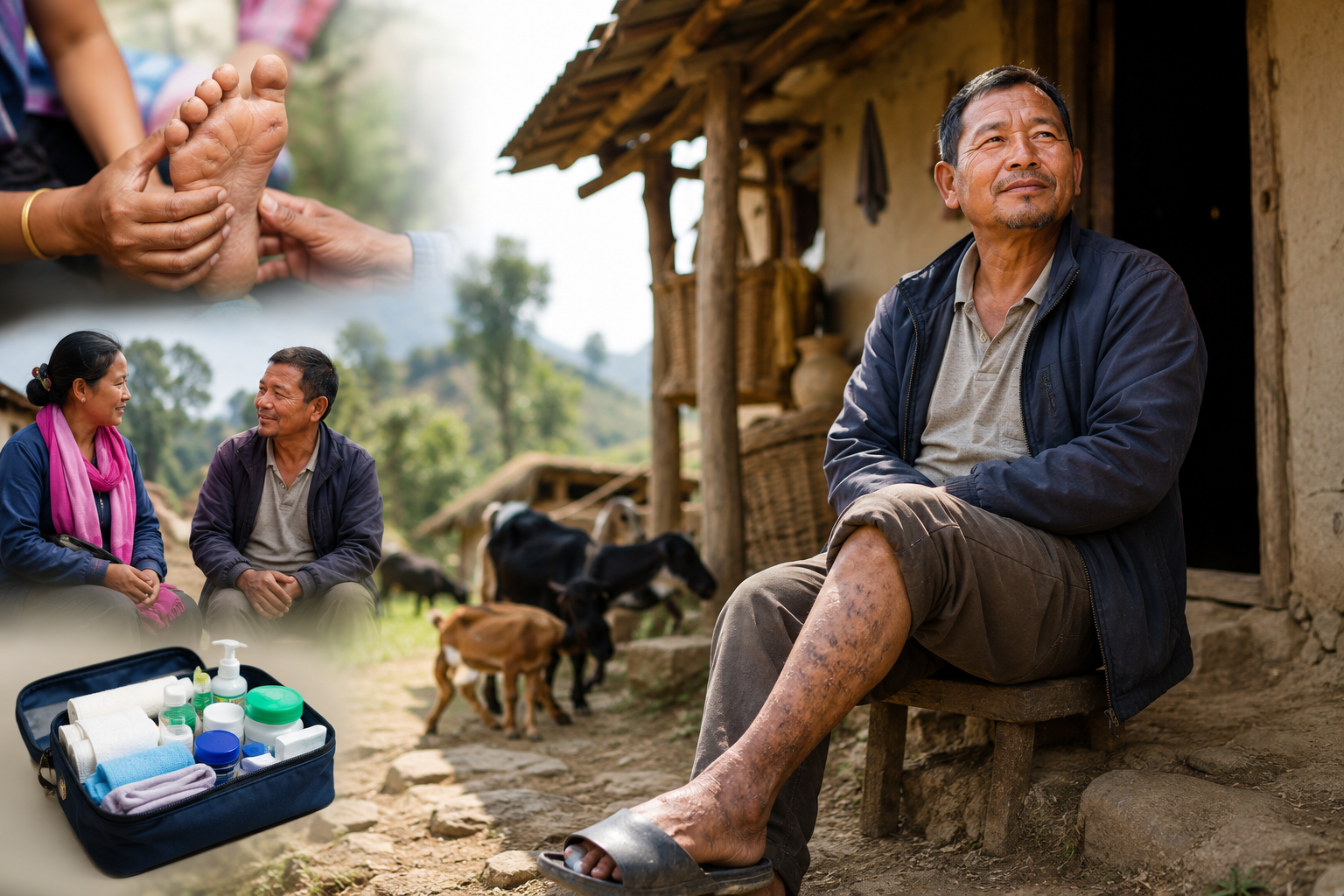
Bhairam B.K., a 45-year-old resident of Ratodanda in Babai Rural Municipality–5, supports his family through goat rearing and small-scale farming. He lives with his wife, daughter, and grandson. During his free time, he enjoys socializing with people in his community and participating in local gatherings.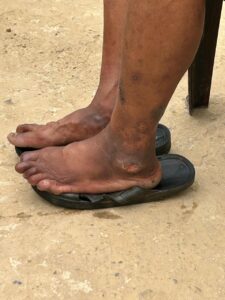
Although he shared that the community had not treated him harshly, he felt that people’s attitudes changed after they learned about his illness. Their behavior became noticeably different, making him feel socially isolated.
Bhairam first noticed symptoms of leprosy when he was 22 years old while working in India. At that time, he began treatment but discontinued the medication before completing the full course. As a result, the disease remained unmanaged for many years. Earlier this year, he began experiencing serious complications in his foot, which gradually worsened.
Through the PRERANA Project, Female Community Health Volunteers (FCHVs) received training on Neglected Tropical Diseases (NTDs), including leprosy identification, referral, and community awareness. After completing the training, an FCHV visited Bhairam’s home and encouraged him to attend a skin examination camp where a doctor was available.
Initially, Bhairam refused to seek medical care. He repeatedly insisted, “Nothing is wrong with me,” and avoided leaving his house for examination. Even during a follow-up home visit by the project staff one month later, he continued to hide his condition and declined medical referral.
However, when the condition of his foot became severe and developed into an infected wound, Bhairam himself contacted the project team and requested help.
The project staff personally accompanied him to Shreejana Medical in Ghorahi, where he was examined by Dr. Pratap Pokhrel. Following a thorough assessment, he was diagnosed and advised to complete a one-year course of multidrug therapy (MDT). He was then linked with the government health system to receive free medication and regular follow-up services.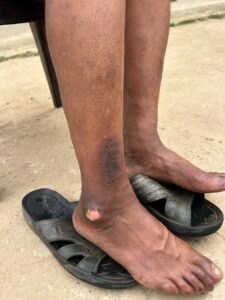
Because the designated health facility was located far from his home, arrangements were made for him to receive his medication from a nearby health institution only 15 minutes away, making treatment much more accessible. Health workers also provided regular counseling and guidance on disease management and self-care.
In addition to medical treatment, the PRERANA Project supplied Bhairam with a self-care kit and trained him on proper wound care and daily self-management practices. Since using the self-care materials and following the recommended care routine, his condition has gradually improved.
Despite this progress, Bhairam continues to face physical challenges. Due to nerve damage in his foot, he is unable to wear regular shoes and must use open slippers while working in the fields or grazing goats. This increases his risk of injuries and makes earning a livelihood more difficult. Nevertheless, he remains determined not to let the disease define his future.
“I have not given up. I will continue taking my medicine, take better care of myself, and prevent this disease from becoming worse.”
Reflecting on his journey, Bhairam expressed deep gratitude for the support he received through the PRERANA Project.
“This project has given me a new life. If it had not reached my village, I would have remained hidden inside my house while my condition kept worsening. The encouragement, support, and care I received gave me the courage to seek treatment. I sincerely thank everyone who stood beside me.”
Bhairam’s story highlights the importance of community-based case detection, trained Female Community Health Volunteers, persistent home follow-up, and compassionate counseling in reaching people affected by leprosy who may fear stigma or deny their illness. By improving access to diagnosis, treatment, and self-care support, the PRERANA Project has helped restore not only Bhairam’s health but also his confidence, dignity, and hope for the future.